Flat Roof Tear-Off and Tapered Deck Re-Roof in Forest Park
Ponding water on a flat roof is not just an annoyance - it's a warning sign. When water sits in the same spots after every rain, it means the underlying structure isn't draining the way it should. Patching over that problem doesn't fix it. It just delays the damage.
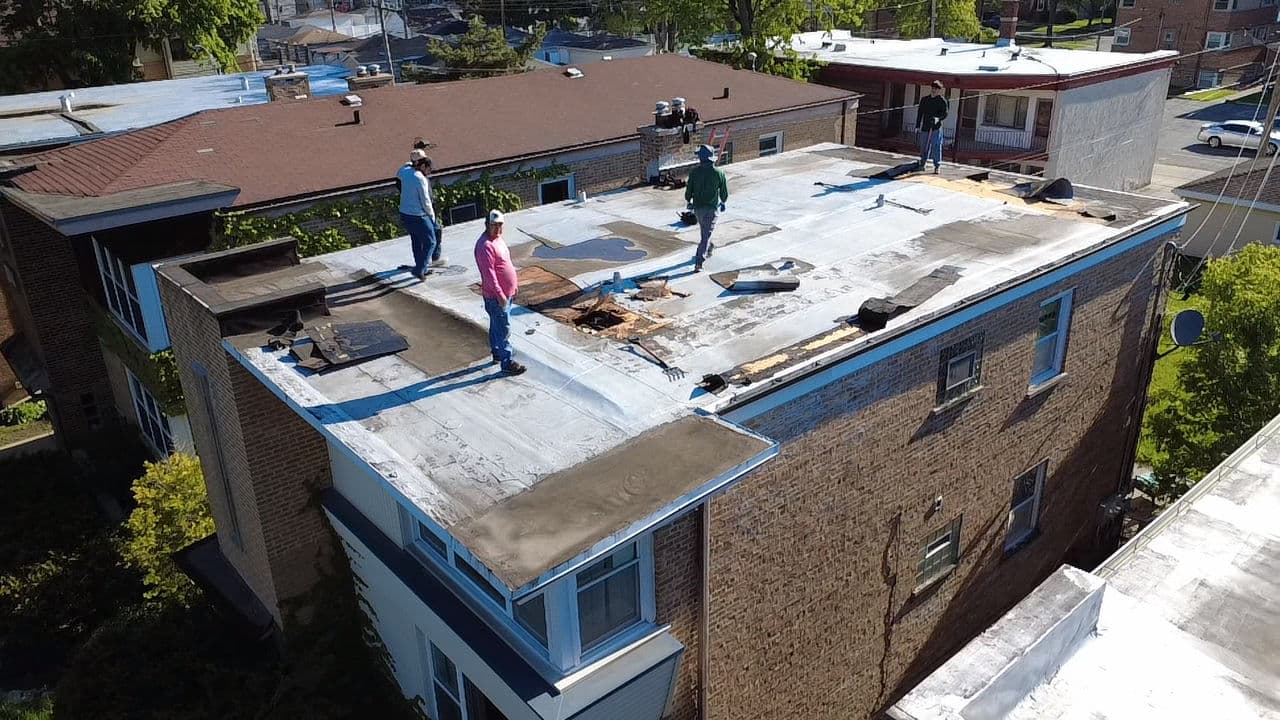
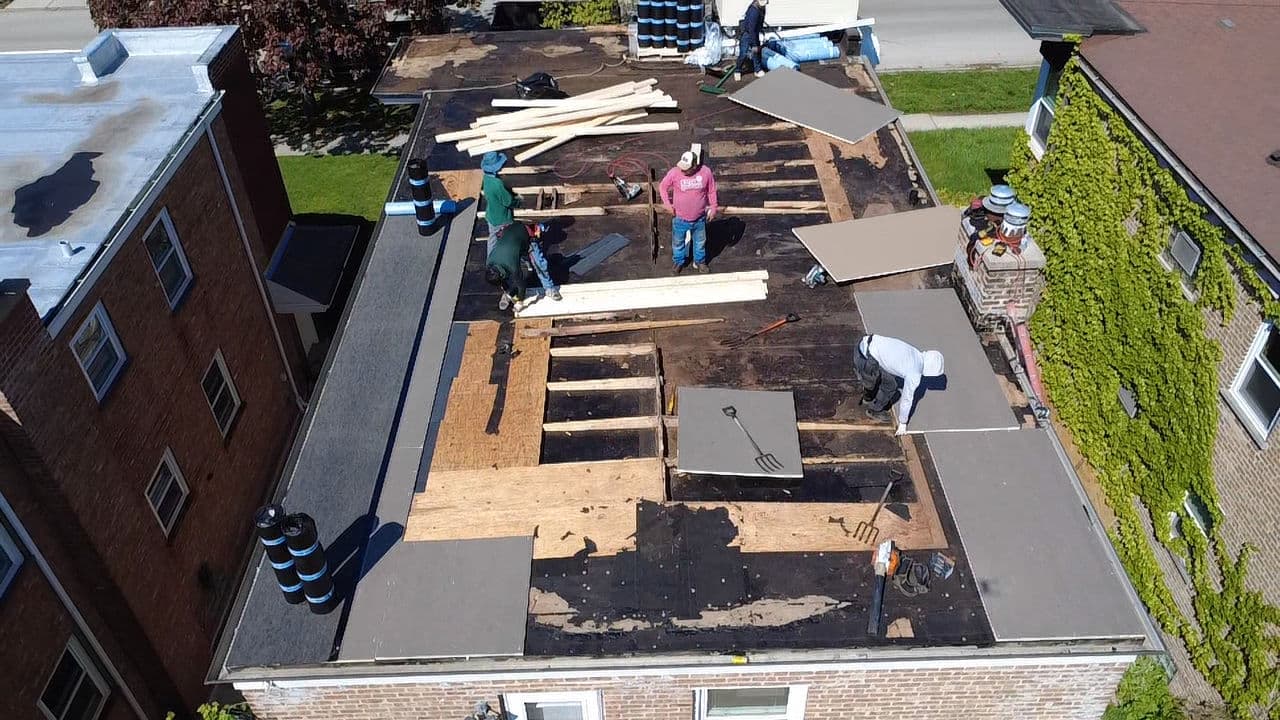
Here's what we were working with on this Forest Park job. The existing roof was done. We stripped everything off down to the deck and found exactly what we expected - deteriorated material and areas where water had been winning for a long time. That's the thing about flat roofs that have drainage issues. The surface membrane takes the blame, but the real culprit is slope. Or the lack of it.
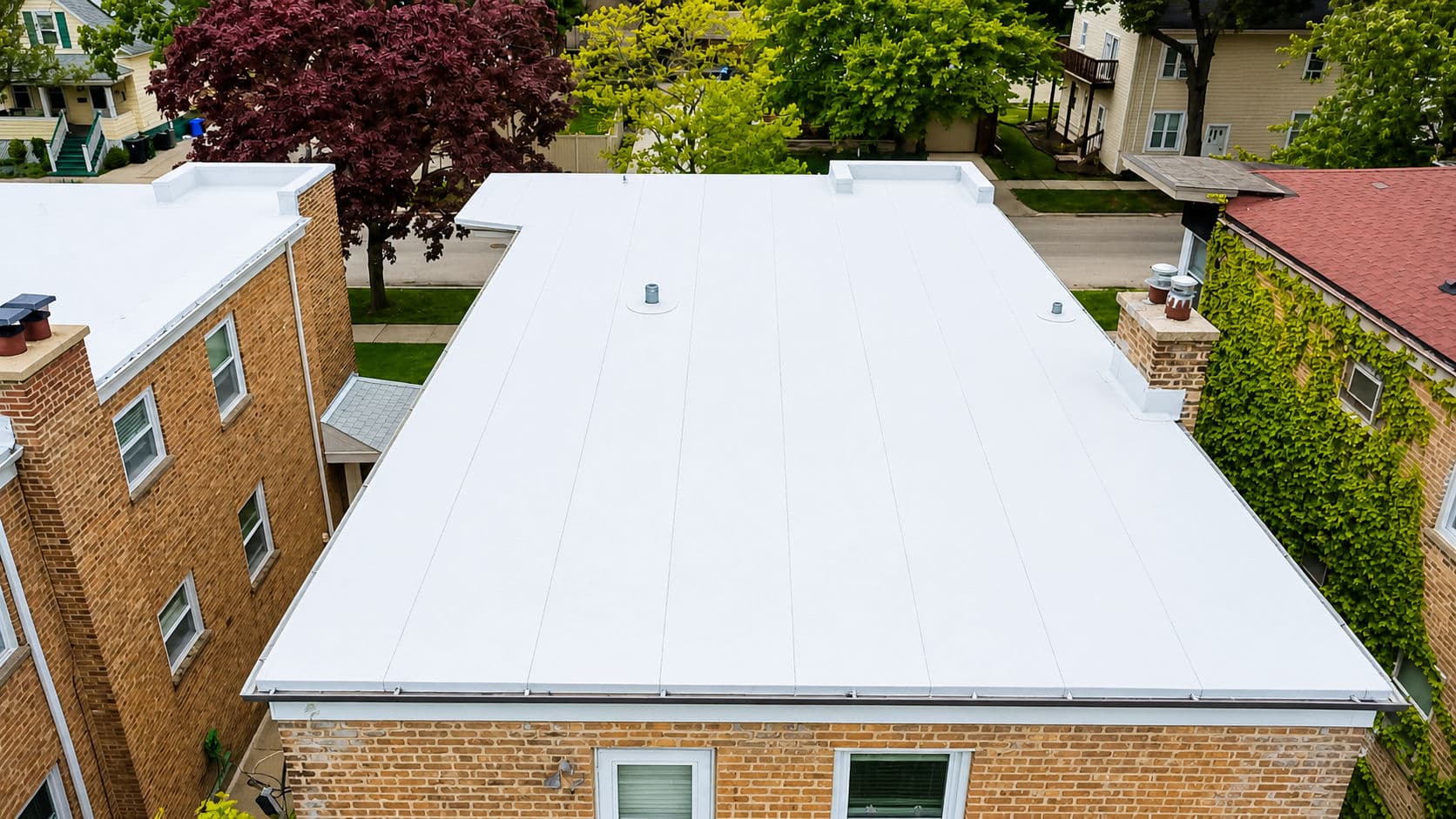
Once the old material was gone, we installed a tapered deck system. This is the part most people don't see, but it's the most important part of the whole job. The tapered framing creates a deliberate pitch across an otherwise level surface so water actually moves toward the drains instead of sitting there. No slope, no drainage. It's that simple. After the deck was set, we finished with a modified granulated torch down roofing system - a durable, heat-welded membrane that performs well in all kinds of weather and holds up over the long haul.
The finished roof is clean, properly sloped, and built to actually shed water. That's what a commercial flat re-roofing job should look like when it's done right. Not just a new surface layer - a system that addresses the root cause.
If your flat roof has low spots that stay wet after rain, that's not normal wear. That's a drainage problem that will keep causing damage until it's corrected. Getting eyes on it sooner rather than later is always the right move.