Granulated Modified Flat Roof Installation on a Chicago Commercial Building
Commercial flat roofs take a beating in Chicago. Wind, rain, freeze-thaw cycles, ponding water - it adds up fast. When a roof starts showing wear, the damage doesn't stay on the roof. It works its way into the building, and that's when the real costs start.
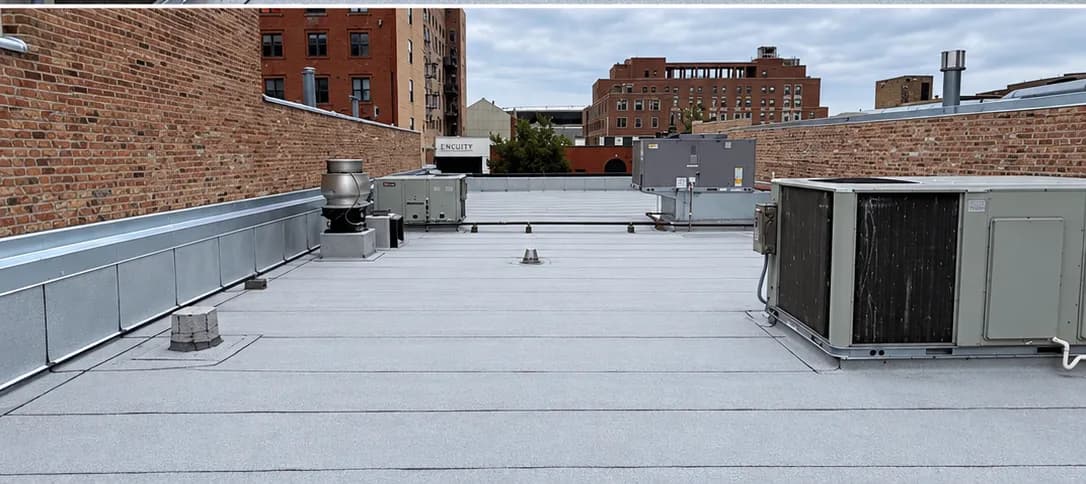
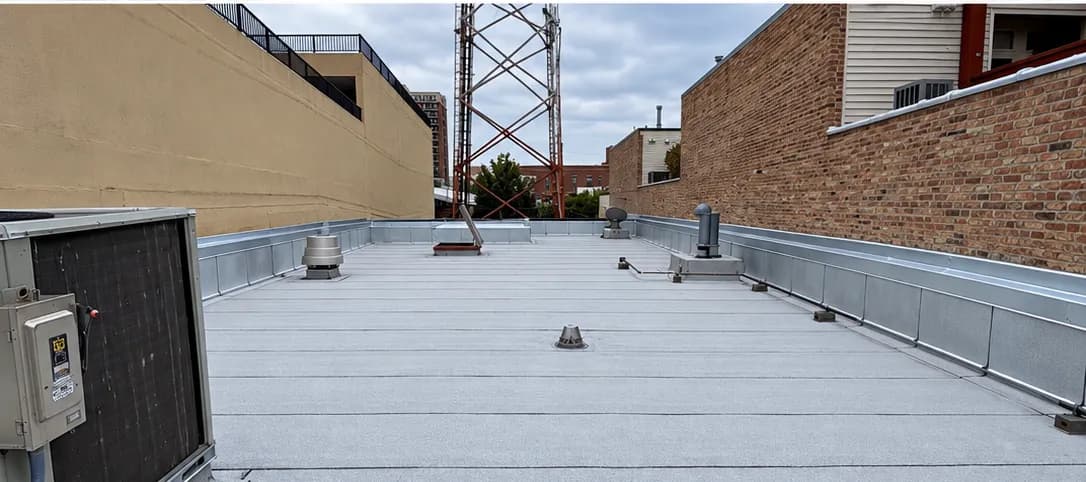
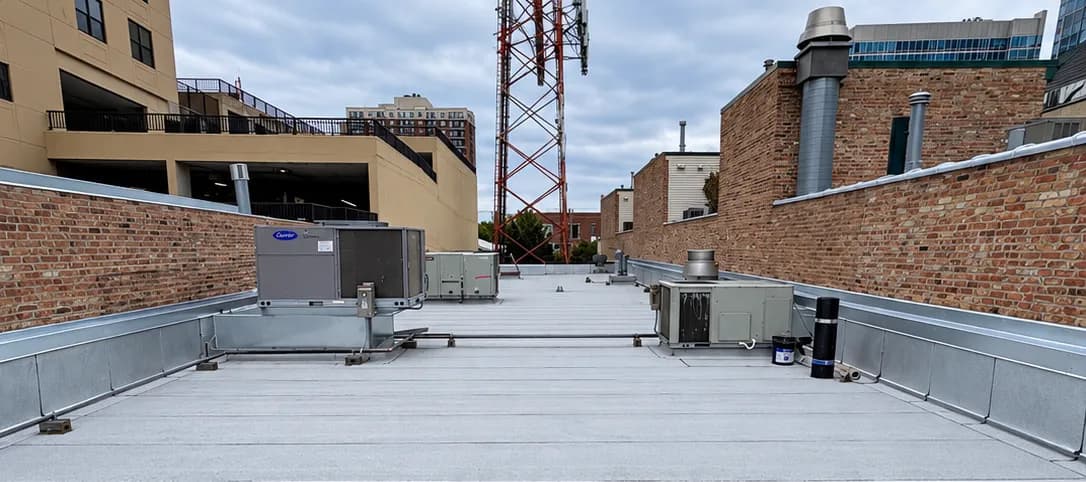
Here's what we were working with on this job - a multi-unit commercial building in Chicago that needed a full roof replacement. We went with a granulated modified bitumen system, which is one of the best options available for flat roofs in this climate. The granulated surface adds durability and UV resistance, and the modified bitumen membrane itself is built to handle temperature swings that would destroy lesser materials.
One thing that separates a good flat roof installation from a bad one is how the details get handled. Penetrations, HVAC curbs, drains, parapet walls - those are the spots where water finds a way in if the work isn't done right. We make sure every one of those transitions is properly flashed and sealed. No shortcuts.
The finished surface is clean, uniform, and tight from edge to edge. That matters because a flat roof with inconsistent membrane installation is just a slow leak waiting to happen. When you do this right, building owners aren't dealing with emergency repairs or interior damage - they're just protected.
If your commercial roof is showing signs of wear - bubbling, cracking, pooling water, or interior water stains - it's worth having someone take a look before it becomes a bigger problem. A quality flat roof installation is one of the best investments you can make in protecting a commercial property.